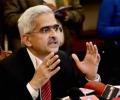
All members of the Monetary Policy Committee (MPC) -- Shashanka Bhide, Ashima Goyal, Jayanth R Varma, Mridul K Saggar, Michael Debabrata Patra and Shaktikanta Das -- had unanimously voted to keep the policy repo rate unchanged at 4 per cent after the three-day meet of the panel earlier this month. Further, except Varma, other members voted to continue with the accommodative stance as long as necessary to revive and sustain growth on a durable basis and continue to mitigate the impact of COVID-19 on the economy, while ensuring that inflation remains within the target going forward. Varma expressed reservations on this part of the MPC resolution, according to the minutes.

Here are the many pros and some cons of going for such an arrangement

Observing that there is liquidity overhand of Rs 13 lakh crore in the system, RBI Governor Shaktikanta Das said on Friday that the exceptional measures undertaken during pandemic will be dealt in sync with macroeconomic developments to preserve financial stability. Since the onset of the pandemic, the Reserve Bank has maintained ample surplus liquidity to support a speedy and durable economic recovery, he said while announcing the outcome of the Monetary Policy Committee (MPC) meeting. The level of surplus liquidity in the banking system increased further during September 2021, with absorption under fixed rate reverse repo, variable rate reverse repo (VRRR) of 14 days and fine-tuning operations under the liquidity adjustment facility (LAF) averaging Rs 9 lakh crore per day as against Rs 7 lakh crore during June to August 2021, he said.

Geeta has not competed much since she attempted to qualify for the 2016 Rio Olympic Games unsuccessfully.

For any airline to be eligible for restructuring, the current ratio has to be equal to or higher than 0.4, while 'debt to Ebitda' has to be equal to or less than 5.5.

Five Star Business Finance is in the business of providing loans to MSME entrepreneurs. Gireesh Babu finds out more about the company that plans to grow to 3,000 crore by 2020.

The biggest challenge with public sector banks is the processing time, which is why starting early helps.

Though the NITI Aayog did not give its estimates for the required GDP growth at constant prices, economists pegged it at 9 per cent, a feat not seen since the GDP series was revised with 2011-12 as the base year.

With the management of most State-owned banks hardly having time to concentrate on big-ticket business, growing the business of loan disbursals has been pushed down the priority order.

Penalty must act as a deterrent. If it is too low, it could encourage the regulated entities to lap up penalty instead of complying with the norms, suggests Tamal Bandyopadhyay.
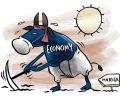
MGNREGA scheme: A significant Rs 17,370.58 crore has been carried forward over to the next financial year as unpaid dues as demand for work continued unabated for the scheme in rural areas.

With big data analyses, your investments, spends and big purchases are being tracked more closely now by the income tax department.

If re-elected, his government will set up a National Traders' Welfare Board, bring trader credit cards and a pension scheme for small shopkeepers besides making a provision to provide loans of up to Rs 50 lakh without collateral.

Make your 'dream-home' dream come true

HAL is poised to sell the Philippines at least seven Dhruv Advanced Light Helicopters and eight Dornier 228 aircraft for Rs 30 billion, reports Ajai Shukla.

Govt doesn't buy restaurants' input tax excuse and has swing into action and looking into profiteering complaints on social media against prominent restaurant and franchise chains.
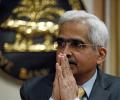
RBI Governor Shaktikanta Das on Thursday said financial inclusion will continue to be a "policy priority" for the central bank to make the post-pandemic recovery more equitable and sustainable. The Reserve Bank of India will very soon be coming out with the first financial inclusion index, which will assess progress in terms of access, usage and quality, Das said, while speaking at the Economic Times Financial Inclusion Summit. It is the responsibility of all stakeholders to ensure that the financial ecosystem (including the digital medium) is inclusive and capable of effectively addressing risks like mis-selling, cybersecurity, data privacy and promoting trust in the financial system through appropriate financial education and awareness, he added.

Due to the prevailing uncertainty, the risk of loans going bad has certainly increased. This may result in lenders following risk-based pricing more diligently, notes Naveen Kukreja, CEO, Paisabazaar.com

The bosses of SBI, Union Bank and Central Bank have been driving down to their offices everyday to take stock of the biggest loan drive ever undertaken for MSMEs, discovers Tamal Bandyopadhyay.

Director of the National Centre for Disease Control (NCDC) Dr Sujeet Kumar Singh said the remaining 77 per cent are still vulnerable to the viral disease and containment measures need to continue with the same rigour.

The agency noted that the reviews of these banks' sub-debt ratings were not indication of any change in the affected banks' fundamental credit quality.

Ronaldo back for Man Utd but injured Shaw faces weeks out

The trick is to know how long you are supposed to hold which document, observes Bindisha Sarang.

Anil Rego, CEO, Right Horizons, answers your personal income tax queries.

Banks make use of credit scores based on your credit history and repayment record.

VIL pegs dues at Rs 21,533 cr, less than half of DoT estimate. During a meeting with Vodafone Group CEO Nick Read, Telecom Minister Ravi Shankar Prasad made it clear that the government is against a monopoly in the telecom sector, and wants Vodafone Idea to survive and remain invested in India.

Measure each word you utter in public, advises Virendra Kapoor.

Bad management, an exhausted government vigilance mechanism, delay in roping in private players, relaxing norms, and over-dependence on antigen tests may be the reason behind the surge, reports Shine Jacob.

Stating that COVID-19 has not yet been contained in India, the rating agency in a statement said the government stimulus package is low relative to countries with similar economic impacts from the pandemic. "The COVID-19 outbreak in India and two months of lockdown -- longer in some areas -- have led to a sudden stop in the economy. That means growth will contract sharply this fiscal year (April 2020 to March 2021)," it said. "Economic activity will face ongoing disruption over the next year as the country transitions to a post-COVID-19 world."

'The financial sector's performance in the first two quarters was a revelation.' 'It clearly showed the clean-up had been done in the past one-and-a-half years and that capital brought in was significantly stronger.'

'The effect will be seen two-three quarters down the line.'

In a drastic measure to stem any major disruption to the US economy as a result of the coronavirus outbreak, the Federal Reserve has cut its benchmark interest rate to almost zero and said it would buy USD700 billion in bonds. The covid-19 pandemic has sickened more than 156,000 people worldwide and left more than 5,800 dead. The death toll in the US stands at 68, while infections neared 3,700.

Answers to six commonly asked questions about CIBIL score that will help clear your confusions

The only way for Dravid to sort out the mess was by forcing a showdown and getting Chappell removed as coach. That possibility was remote as Dravid neither had the ears of the BCCI nor was he the sort to confront knotty issues head on. A fascinating excerpt from Pradeep Magazine's Not Just Cricket: A Reporter's Journey through Modern India.

Credit Appraisal is the process followed by banks to determine the borrower's ability to repay his loan as well as his trust worthiness.

If your are hassled with too many EMIs, bring them all under one umbrella and pay a single amount

The finance minister asked lenders to identify eligible borrowers and reach out to them and urged for quick implementation of a sustained resolution plan for the revival of every viable business.

11 sectors to have credit exposure to environmental risks in next five years.
Among the bank groups, under the baseline scenario, public sector banks' gross NPA ratios may increase to 13.2 per cent by September 2020 from 12.7 per cent in September 2019.

While the ratio determines the extent to which the government is able to finance its expenditure, it is also an indicator of tax compliance. Developed countries have a higher contribution of tax to their GDP.
